
Let’s Talk Hearing: An Inside Look with Our Audiologist, Joanna
Hearing plays a powerful role in how children connect, learn, and communicate. In this interview-style blog, Lauren sits down with our audiologist, Joanna, to talk through the hearing services we offer—from hearing evaluations and hearing aids to central auditory processing services—and how they support children at every stage.
L: Tell us about Way to Grow’s hearing services in general:
J: We offer comprehensive hearing tests for babies up to all ages. We are able to do hearing tests, offer auditory processing evaluations, and fit kids for hearing aids.
L: I’d love to know more about what you offer in terms of hearing aids! Describe the hearing aid process from evaluation on!
J: Let’s say your child has been diagnosed with hearing loss - something not easily fixable or permanent.
Next, we send you on to see an ENT for them to medically evaluate your child’s hearing loss and to make sure there’s not a medical problem that they need to address. From there, they give us medical clearance to go ahead and get hearing aids. It can be a long process, but we are able to walk through it with families.
Then, we check hearing benefits, try out hearing aids, make ear molds, and once we order, it’ll take about two weeks to come in.
You’ll come in for a fitting appointment, where I (Joanna) program and fit the hearing aids, and tell you how to take care of them. That appointment is about 60-90 minutes.
You’ll go through a trial period for your new hearing aids - usually about 60 days. During this period, you typically come in a couple times, we’ll discuss how things are going, and I (Joanna) will make any needed adjustments.
After that, we’ll see each other every 6 months or so for a tune-up.
The benefit of working with Way to Grow, is that I can get folks in quickly, within a couple of weeks, while many other clinics book out a bit further.
L: What types of hearing aids do you offer? Is there a specific brand you use?
J: There are two main companies that are big in the pediatric field. The company that we work with is Phonak, so we offer Phonak products. One of the big reasons we were steered towards this company is because of the compatibility with equipment at the schools.
L: What sets Way to Grow apart from other audiology clinics?
J: Way to Grow is the only Pediatric-only hearing aid clinic in this area besides the Echo program in Champaign. There are other places that do pediatrics along with adults, but we are the only strictly pediatric clinic.
L: How long have you been working as an audiologist and doing hearing testing and fitting? And is there anything that makes you, Joanna, stand apart in comparison with other providers?
J: It’s been 15 years! I see all aspects in kids that use hearing aids because I also am an educational audiologist and work for the two big co-ops in the area. I see the implications and the struggles, and I understand and support what kids need in school. I’m able to see the full circle of it. I’m not just in a clinic seeing kids every 6 months. I understand the educational implications and how to support and tune hearing aids and ensure schools are following along and giving accommodations.
L: Is there anything else folks might want to know about Way to Grow’s hearing services?
J: If you need help with your hearing aids, even if you didn’t get them from us, we’re here to meet those needs in the community, and we’re trying to make it a price that families can afford.
L: Ok, so in addition to offering hearing testing and hearing aids, I know you also test auditory processing. Tell us a bit about central auditory processing evaluations!
J: I am one of the only providers in the area that does auditory processing evaluations. Oftentimes these kids present as kids who seem to have a hearing loss. They break down in noise, can’t follow directions in the classroom, and there’s an apparent disconnect. Families may say, “I’ve had their hearing tested five times, and it’s always normal.” We can look at doing auditory processing testing which shows a disconnect between the hearing process and the brain. We know they hear the sounds normally but the breakdown is in what the brain does with it. (Click here to learn more about auditory processing).
L: If the child’s hearing is normal, how do you even test that?
J: We have a whole battery of tests that we use - a lot of listening exercises, listening in noise tests, tests that check how you integrate and separate information that you hear. It’s a pretty comprehensive test.
L: For auditory processing, is it just an audiology exam, or does speech-language pathology (SLP) get involved too?
J: For kids who we suspect AP or is diagnosed with APD, oftentimes there’s an SLP involved and they are able to do some language testing as well. We also refer to occupational therapy to help with some therapeutic listening. It’s very much a team approach that we are trying to take with auditory processing.
L: Are those therapies helpful? Do they make a difference for those kids?
J: Yes, and we are able to offer those at Way to Grow. There are therapies in the clinic, in addition to electronic based therapies that we are able to train parents to do at home with their kids - and there are great results. Some of it will take auditory maturation, but specifically targeting some of these difficulties can have a huge impact. One personal experience comes to mind: There was a kid I was able to diagnose auditory processing disorder. I was involved with their team at school, and we were able to get a full special education evaluation. With a diagnosis and the necessary services, the child went from being very behind with reading and writing and needing lots of additional help to recently graduating from high school no longer needing an IEP. With the right interventions and supports it’s not something that’s going to haunt you for the rest of your life.
L: Electronic based therapies?! I’m curious about that… What are those?
J: We use Acoustic Pioneer, which is a program that kids can do on their iPads. I also recently did training to be a CAPDOTS provider - which is more of an intensive program, but it’s run at home. It is about 10-15 minutes, 5 days per week, for 8-12 weeks.
L: Do you see parents feel relieved once they realize there’s an answer and there are ways to get help?
J: Yes - it can be complex, and parents often assume ADD, which can happen in conjunction with auditory processing disorder, but may not be the whole picture. Once parents get some answers, it can be relieving to know there are some supports out there for them.
L: Is there anything that makes Way to Grow stand apart in terms of auditory processing services?
J: Besides services offered through schools, we are the only private clinic that offers it in the Peoria area. What makes our private testing stand apart is working closely with an SLP who understands auditory processing and can do therapies for that. This is not always available in the same way at school.
L: You mentioned ADD - but are there any other other diagnoses that are frequently co-existing with auditory processing disorder?
J: Yes - some co-occurring diagnoses we’ll see frequently are ADD, dyslexia, and chronic ear infections
L: At what age can you come in for an auditory processing evaluation?
J: The youngest we do it is age 7. We are able to tell that a child has some AP difficulties at a younger age, but when we can get kids through the testing and when it’s normed is age 7.
L: If there was one thing that you would want local parents to know about these services, what would it be?
J: Getting a diagnosis and understanding what’s going on with your kid is a great first step, but I would want parents to know that they don’t have to sit around and wait for kids to get better. There are services available that can help - therapies, programs, etc. If you want to learn even more, or are ready to take that next step, click here.
We’re here to help you every step of the way!
Dr. Joanna Capobianco, AuD, CCC-A
The Way to Grow Pediatric Therapy Team 🌟
about our audiologist:
Meet Dr. Joanna - Way to Grow’s fantastic audiologist! Joanna received her Doctorate in Audiology (AuD.) from Illinois State University in 2010, and has been with Way to Grow since 2022! Joanna has a heart for children, and is an excellent advocate for others - especially when it comes to seeing every child receive the best hearing healthcare possible, no matter their situation. You may not have guessed it, but in addition to being an audiologist, Joanna is an Army Veteran - she served in Operation Iraqi Freedom. If you’ve met Joanna you know that she is a beam of light, kindness, laughs, and overall good times - and her hobbies reflect that! When Joanna can’t be found in the sound booth or at home with her husband, sons, + weiner dog - you might find her thrifting (“Let’s face it - I LOVE a good deal!”) or camping.

about our featured writer:
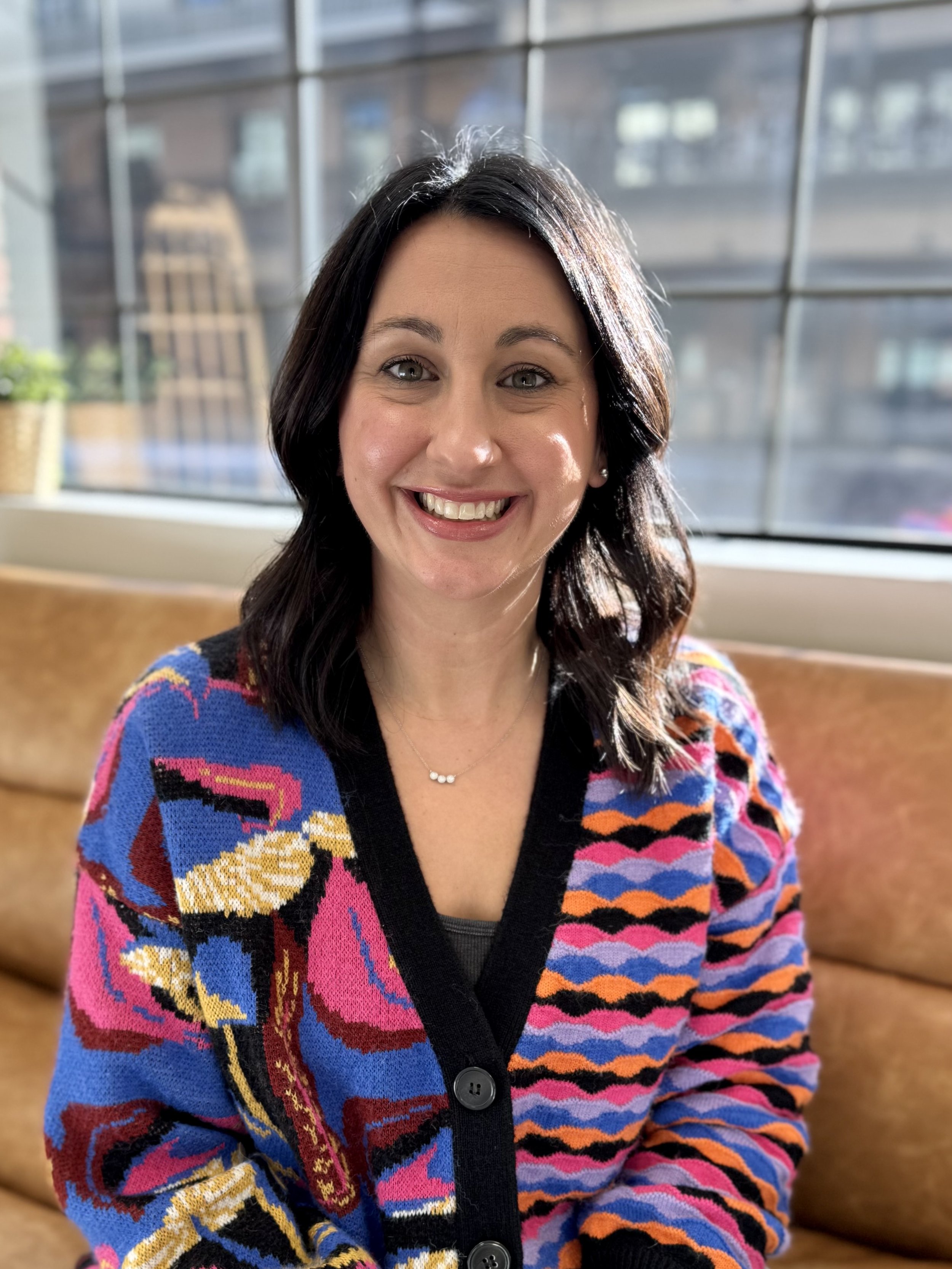
Meet Lauren - she joined the Way to Grow team in August 2022, and is one of our beloved speech language pathologists! Lauren received her Master of Arts in Speech and Hearing Science from The University of Illinois at Urbana-Champaign, and has an extensive background in all things music + voice. In addition to supporting the pediatric population with communication skills, Lauren is also a vocal instructor and a local theatrical performing artist. With a deep love for helping people of all ages find their voice, Lauren believes that every individual has something important to share, and she’s here to make sure they know it too. Her gentle guidance and expertise create a safe space where kids can grow in confidence and communication skills, learning that their voice truly matters.