
Creating a Sensory Bin at Home
Creating a sensory bin with items you already have at home:
Sensory bins are a fun, easy, and affordable way to learn through play. The best part? You don’t need to buy anything special! Many of the materials needed for a sensory bin can be found right in your kitchen, toy box, or craft drawer. Whether your child receives speech therapy, occupational therapy, physical therapy, or simply loves hands-on activities, sensory bins provide endless opportunities for skill development while having fun. Sensory bins provide children with opportunities to explore, learn, and develop important skills through hands-on play. Whether your child is receiving speech therapy, occupational therapy, or simply enjoys engaging in creative activities, sensory bins are a versatile and effective way to support development while having fun.
What is a sensory bin?
A sensory bin is a container filled with materials that engage a child’s senses, such as touch, sight, sound, and even smell. Children can scoop, pour, dig, sort, hide objects, and explore different textures while practicing important developmental skills while naturally building developmental skills. Sensory bins encourage curiosity, problem-solving, and independent play, making them a favorite activity among therapists and families alike. The best sensory bins do not need to be elaborate. In fact, some of the most engaging sensory experiences can be created with simple household materials.
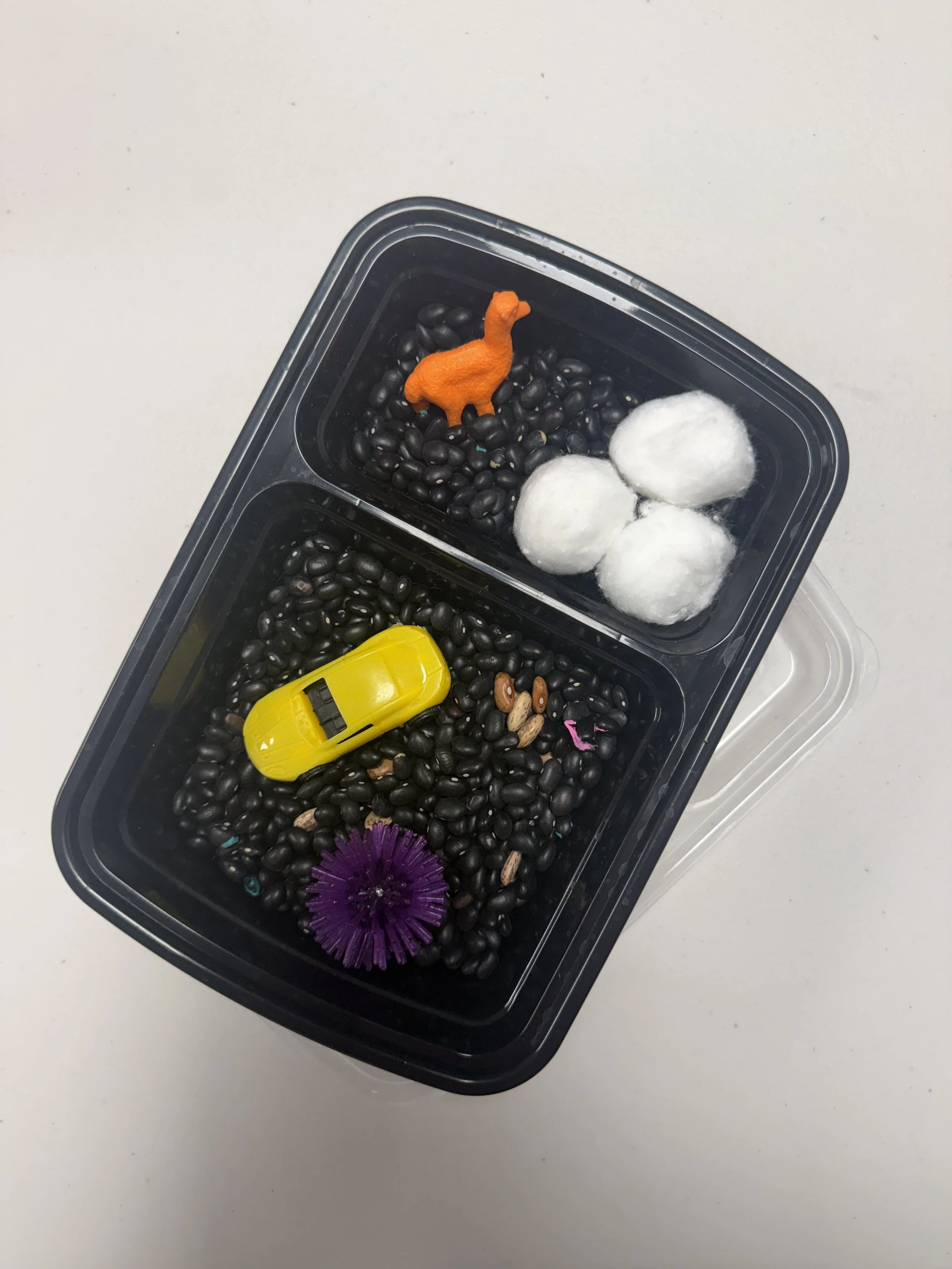
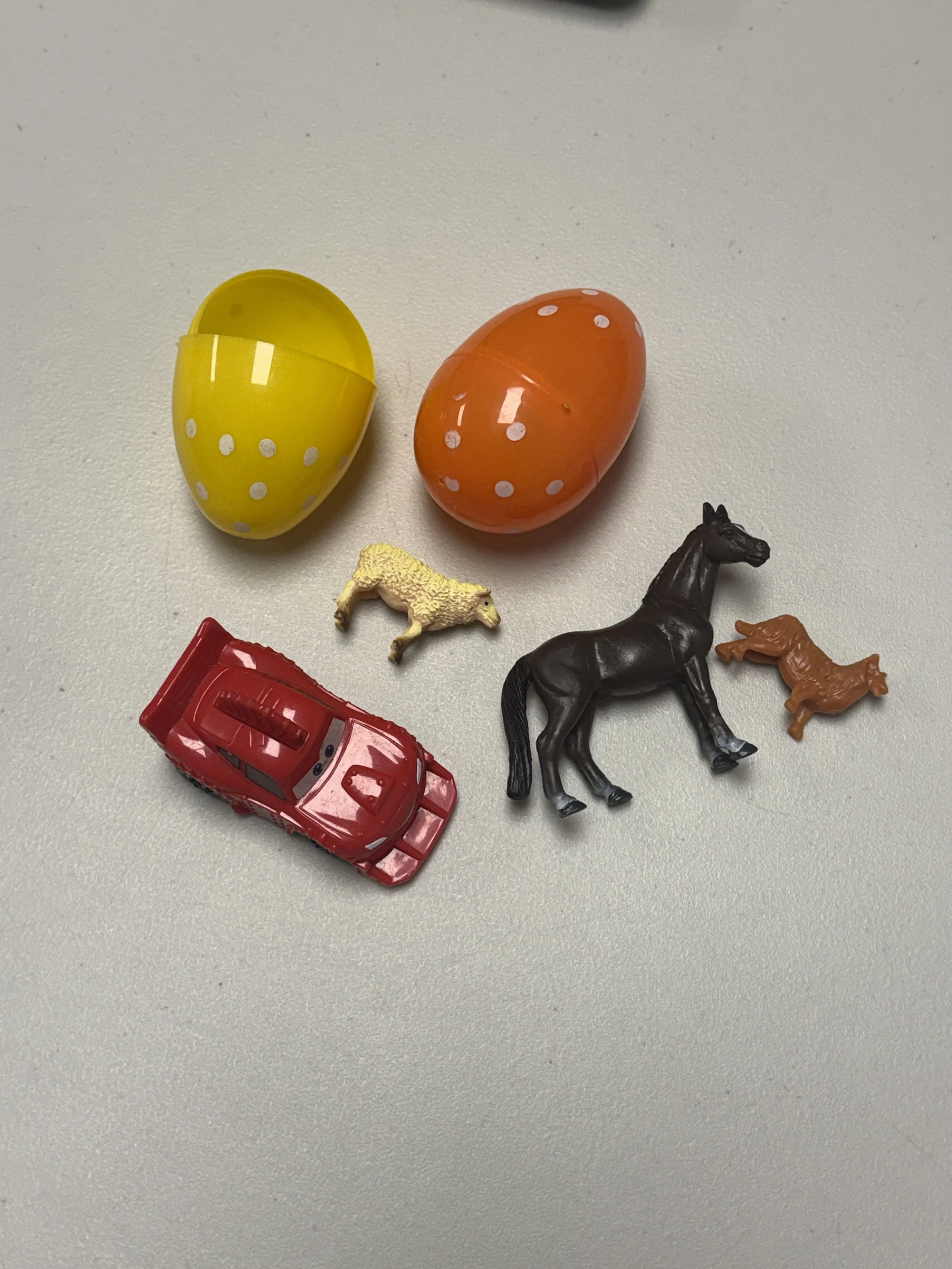
Sensory bin fillers you may already have at home
Take a look around your house! Great sensory bin fillers include:
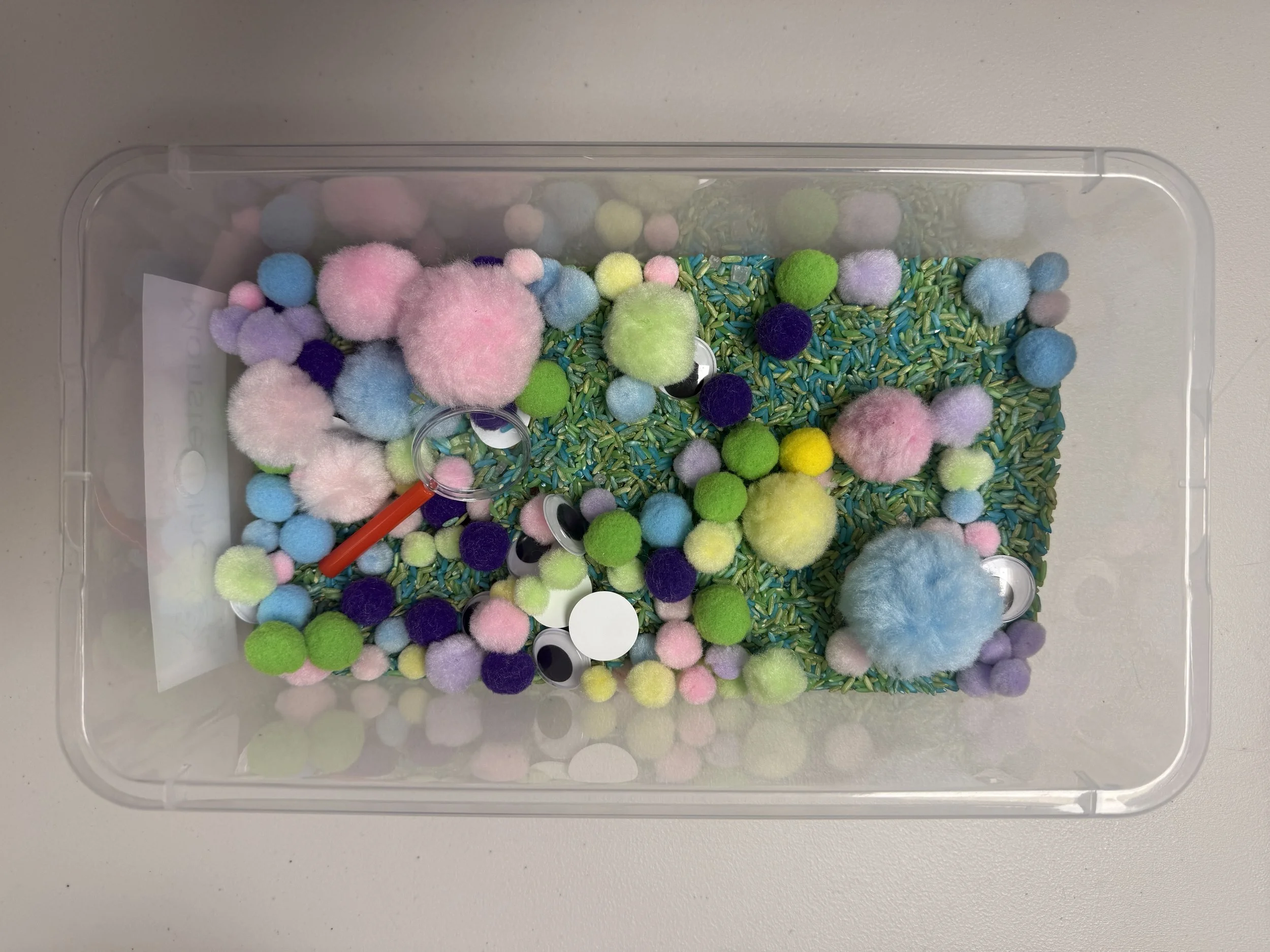
Dry rice
Dried beans
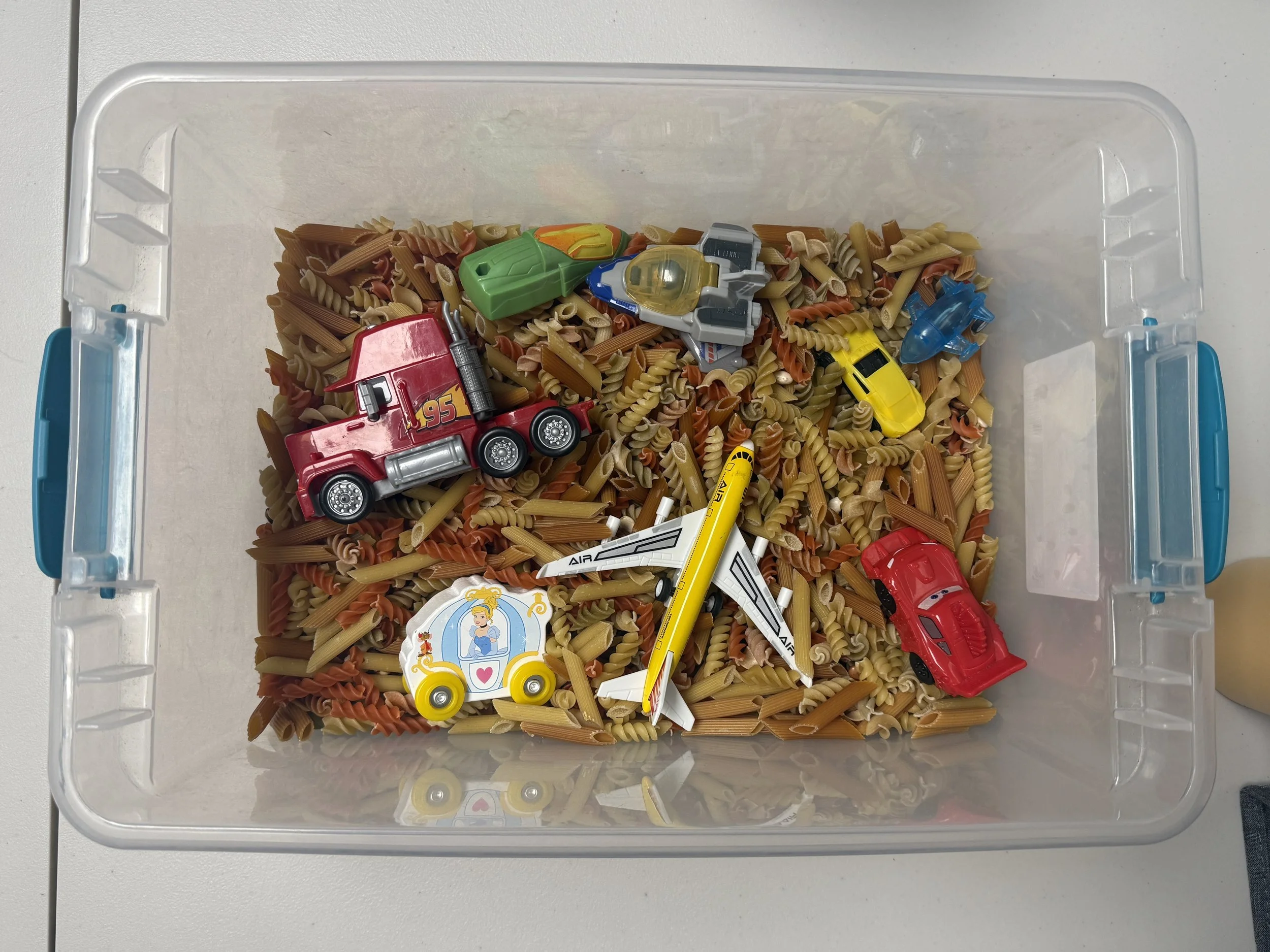
Pasta noodles
Oatmeal
Shredded paper
Cotton balls
Pom-poms
Water
Ice cubes
Playdough pieces
Cereal
Once you’ve chosen a filler, add a few tools and toys to encourage exploration:
Measuring cups and spoons
Funnels
Tongs
Plastic containers
Toy animals
Toy cars and trucks
Plastic eggs
Magnetic letters or numbers
Building blocks
Small figurines
Safety reminder: Always supervise children during sensory play and ensure materials are appropriate for your child’s age and developmental level.
How sensory bins support therapy goals
Speech and language development
Sensory bins naturally encourage communication and language growth. As children explore, parents and caregivers can model vocabulary, ask open ended questions, and encourage conversation.
Ideas for speech and language practice includes:
Naming objects found in the bin
Describing textures (“bumpy” “smooth”)
Following directions
Practicing vocabulary categories
Encouraging conversation and storytelling
Occupational therapy
Sensory bins are an excellent tool for supporting many occupational therapy goals. Manipulating small objects and tools within the bin helps strengthen the muscles of the hands and fingers while improving coordination.
Sensory bins can help develop:
Fine motor skills through scooping, pinching, and grasping
Hand strength
Bilateral coordination
Sensory exploration and regulation
Attention and focus
Many children also find sensory play calming and organizing, making it a valuable activity for self-regulation and emotional regulation!
Physical therapy
Sensory play bins can support gross motor development as well. By changing a child’s position or incorporating movement into the activity, sensory bin can become an opportunity to work on physical therapy goals.
Children can practice:
Reaching across their body
Maintaining balance while standing
Core strength through seated play
Weight shifting
Upper extremely strengthening through digging, scooping, and pouring
Endurance and postural control during extended play activities
Easy Sensory Bin Ideas
Construction zone - Fill a bin with dried and add toy trucks, scoops, and small rocks.
Ocean Adventure - Use water, plastic sea animals, cups, and strainers for a splash-filled sensory experience.
Color Hunt - Fill a bin with rice and challenge your child to find objects of a specific color.
Alphabet Treasure Hunt - Hide magnetic letters or letter cards in rice or pasta and have your child search for them.
Let’s keep playing — outside + in!!
Breeley, Tyla + Leslie
The Way to Grow Pediatric Therapy Team 🌟
our featured writers: meet the W2G summer interns!

Leslie Longanbach

Breeley Brekke

Tyla Mattson