
Scratchy voice: Just a cold… or something more?
It’s that time of the year, when the tissues are running out, sniffs and sneezes are all around, and you can tell as soon as someone says a word.. uh oh, they’re getting sick!
Yes, our voices often give us away, don’t they!? We hear the characteristic hoarseness, breathiness, and pitch changes, and we know in an instant - that a cold is in full swing… or it’s soon to be. And kids are no different! Colds come and go, and this time of year, we become accustomed to the ups and downs of the voice. A bit scratchy, a bit squeaky - oh it’s just a little cold - he’ll be better soon!
But what about those voice changes that stick around… or those voices that have always been hoarse and strained, as long as you can remember? When it is time to start asking some questions? How do you know when it’s time to do something about it - and who do you even go to?
Well, my friend… if you have any of those questions, then you’ve come to the right blog!
Speech-language pathologists are experts in how the voice works (Indeed - we do a lot more than speech sounds!) and how to help when when voice is not working quite as efficiently as it should. Seeing an ENT is a crucial first step for imaging and diagnosis - but a speech-language pathologist (AKA voice therapist) will walk with you to give you the exercises and support that will help your voice heal and grow - so that everyone around you can hear the difference!
Let’s do a quick dive into how the voice works:
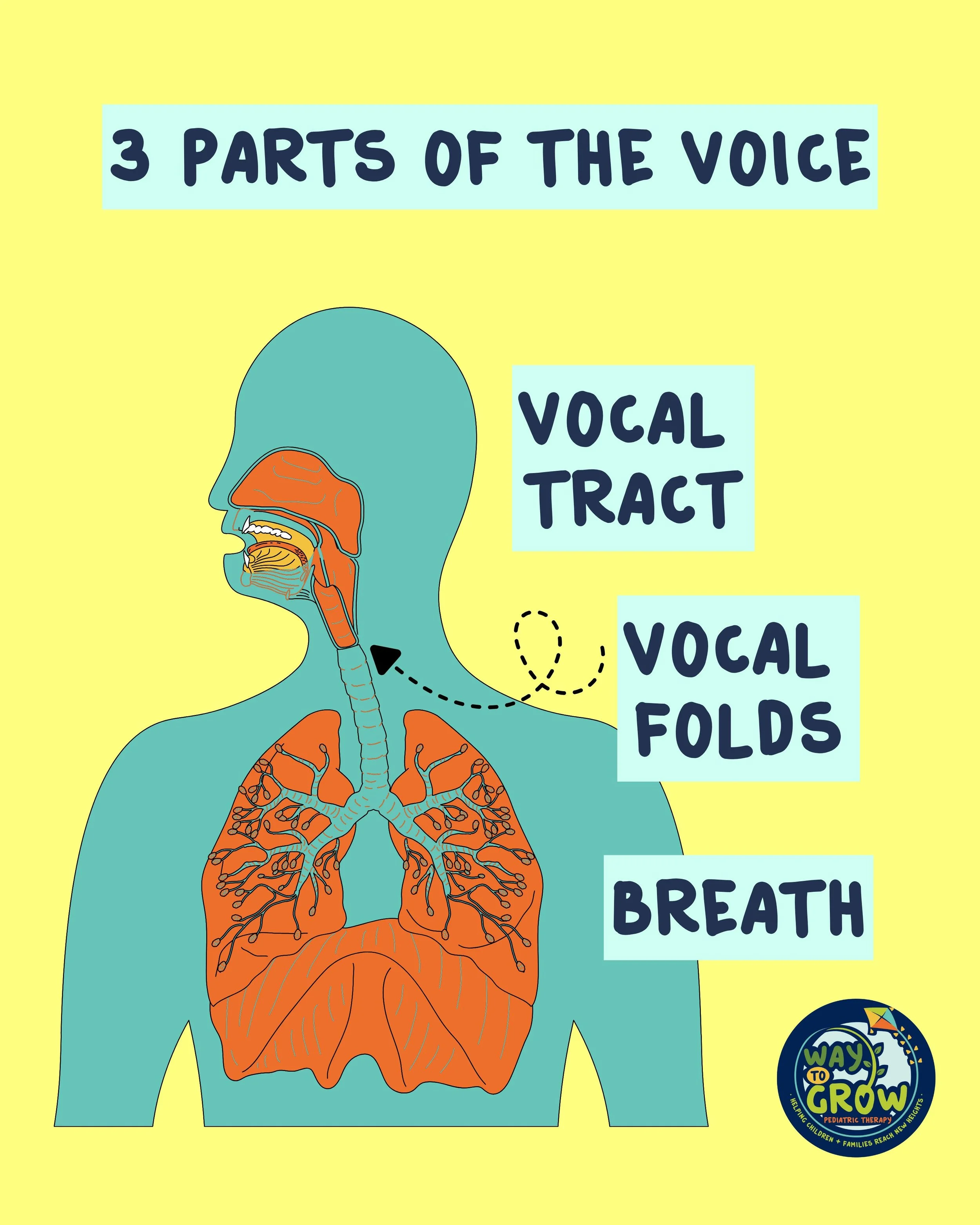
I like to explain it simply - There are three main parts to our voice:
Breath
Vocal Folds
Vocal Tract
When you think about it, of course - the first step to turning your voice on is taking the breath to do it with! The breath portion of the system involves the diaphragm, lungs, and intercostal muscles - around the ribcage. Upon exhale, the air is forced upwards through the trachea and to the level of the -
Vocal folds! Also known to many as “vocal cords”, the vocal folds are at the throat, right behind the adam’s apple. And like the string of a guitar, what makes the sound is a simple vibration! But unlike a guitar string, vocal folds vibrate against one another (not by themselves), creating the voice that we hear - but not quite as we hear it!
That’s where the vocal tract comes in! The vocal tract - the space between the vocal folds and the lips - is filled with articulators: soft palate, tongue, cheeks, teeth, lips - and they shape the sound into the tones and vowels - and yes, consonant sounds too - that the sound waves carry to our ears.
(There’s a lot more to it than that, but those are the basics.)
So what happens when you’re sick?
Well, when a person is sick and experiencing accompanying post-nasal drip, coughing, and soreness, the vocal folds also become irritated and enflamed. And it’s this irritation, swelling, and other changes (like dryness or extra mucus) that cause the vocal folds to vibrate a bit differently - how? Well, maybe we’ll save that for another blog post.
But we all know that those changes come - and your voice may be rough, breathy, strained, squeaky, low or high, softer or louder, more or less nasal, and just sound all around more tinny or booming - and those types of changes are normal - for a time.
That’s the thing about normal voice changes due to sickness. They come… and they go.
Voice changes that require a bit more further investigation, on the other hand, may look like this:
Voice problems that last (without improvement) longer than 3 weeks
Voice that sounds unusually rough, strained, or breathy - even when a person is healthy
Sudden pronounced voice changes - especially after loud crying or screaming
Frequent voice loss after normal use
Pain or unusual fatigue when talking or singing
If you’re curious how best to support your - or your child’s - voice after sickness, then click here for some simple tips for voice recovery!
But if you find yourself asking even more questions, and feel like a voice evaluation might be for you, then please reach out - we’d love to help!
Keep using your voice - but don’t forget to care for it!
Lauren E. Deppe, MA, CCC-SLP
The Way to Grow Pediatric Therapy Team 🌟
about our featured writer:
Meet Lauren - she joined the Way to Grow team in August 2022, and is one of our awesome speech language pathologists! Lauren received her Master of Arts in Speech and Hearing Science from The University of Illinois at Urbana-Champaign, and has an extensive background in all things music + voice. In addition to supporting the pediatric population with communication skills, Lauren is also a vocal instructor and a local theatrical performing artist with clinical experience in voice therapy. With a deep love for helping people of all ages find their voice, Lauren believes that every individual has something important to share, and she’s here to make sure they know it too. Her gentle guidance and expertise create a safe space where kids can grow in confidence and communication skills, learning that their voice truly matters.
